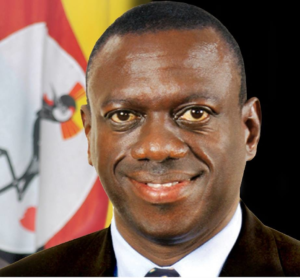
THULANI MASEKO MEMORIAL LECTURE HEARS ALLEGATIONS OF A JUDICIARY SERVING POWER INSTEAD OF JUSTICE
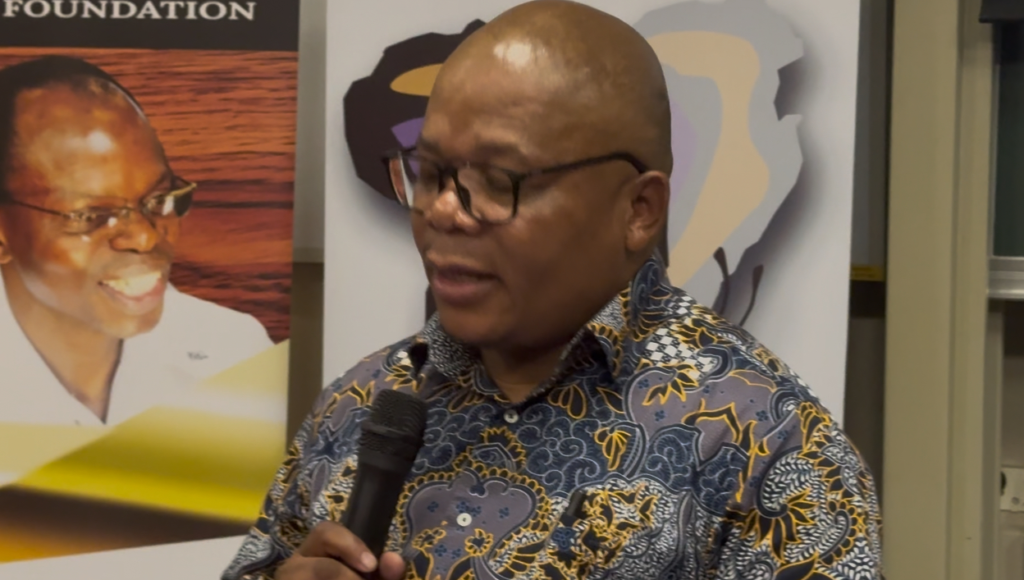
One of the most troubling accusations against the Eswatini state was placed before international human rights organizations this week when prominent human rights lawyer Sibusiso Nhlabatsi alleged that the country’s judiciary has been weaponized and politicized to suppress dissent and protect the interests of those in power.
Speaking during the Thulani Maseko Memorial Lecture at the University of Pretoria, Nhlabatsi told an audience of human rights defenders, legal experts, academics, and democracy activists that the justice system in Eswatini is no longer operating as an independent institution capable of protecting citizens against abuse of power.
Instead, he argued, the courts have increasingly become part of a broader system used to silence political opposition and punish those who challenge the country’s absolute monarchy.
The allegations are significant because they touch on one of the most important pillars of any society governed by the rule of law: judicial independence.
Without an independent judiciary, citizens have nowhere to turn when their rights are violated. Courts are supposed to act as a safeguard against arbitrary arrests, political persecution, and abuses committed by those in authority. When confidence in the judiciary collapses, confidence in the entire justice system begins to collapse with it.
According to Nhlabatsi, the situation deteriorated significantly after the June 2021 political unrest that shook Eswatini and exposed deep frustrations with the country’s political system.
He alleged that specific judges were assigned to preside over terrorism-related cases and that suspects charged under terrorism laws were systematically denied bail regardless of the circumstances of their cases.
If true, such allegations strike at the heart of due process and the principle that every accused person is presumed innocent until proven guilty.
The issue of terrorism charges has become one of the most controversial aspects of Eswatini’s post-2021 political landscape. Numerous activists, politicians, and pro-democracy campaigners have found themselves facing terrorism-related charges in circumstances critics argue are politically motivated.
The imprisonment of pro-democracy Members of Parliament Mduduzi Bacede Mabuza and Mthandeni Dube attracted international condemnation and drew attention to broader concerns regarding the use of security legislation against political opponents.
Human rights organizations have repeatedly questioned whether anti-terrorism laws are being used to address genuine security threats or to suppress legitimate political dissent.
The concerns raised by Nhlabatsi were presented during a memorial lecture honouring the late Thulani Maseko, one of Eswatini’s most respected human rights lawyers and democracy advocates.
Maseko dedicated much of his life to defending victims of injustice and advocating for democratic reforms in a country where political freedoms remain heavily restricted. His assassination in January 2023 shocked human rights organizations across the world and remains one of the most painful symbols of Eswatini’s ongoing human rights crisis.
The memorial lecture brought together a broad coalition of organizations committed to justice and human rights, including Amnesty International, Human Rights Watch, the International Commission of Jurists, the Thulani Maseko Foundation, and the University of Pretoria Centre for Human Rights.
Also present were PUDEMO leader Velaphi Mamba, human rights lawyer Mary DaSilva, Swaziland News editor Zweli Martin Dlamini, representatives of the South African Human Rights Commission, and social justice activist Mark Henwood.
The significance of the gathering extended beyond remembrance. It became a platform for examining the state of human rights, democracy, and the rule of law in Eswatini.
For many observers, the allegations regarding the judiciary highlight a deeper problem within the country’s political system.
In democratic societies, courts are expected to operate independently from political influence. Judges are expected to interpret the law without fear or favour, regardless of whether the accused supports or opposes the government.
However, in an absolute monarchy where power remains heavily concentrated, concerns about institutional independence are inevitable.
This is why the remarks made at the Thulani Maseko Memorial Lecture deserve serious attention.
If citizens begin to believe that courts are being used as political weapons rather than instruments of justice, the consequences extend far beyond individual cases. Public confidence in the rule of law begins to erode, and the justice system risks becoming viewed as an extension of political power rather than a protector of rights.
The late Thulani Maseko spent much of his life warning about the dangers of unchecked authority and the absence of democratic accountability.
The concerns raised at this week’s memorial lecture suggest that the issues he fought against remain unresolved.
Until the judiciary is widely perceived as independent, impartial, and free from political influence, questions about justice in Eswatini will continue to follow the monarchy both at home and on the international stage.