Parliament Demands Auditor General Probe Into Prime Minister Over Alleged Irregular Spending of R100 Million US Deportees Funds
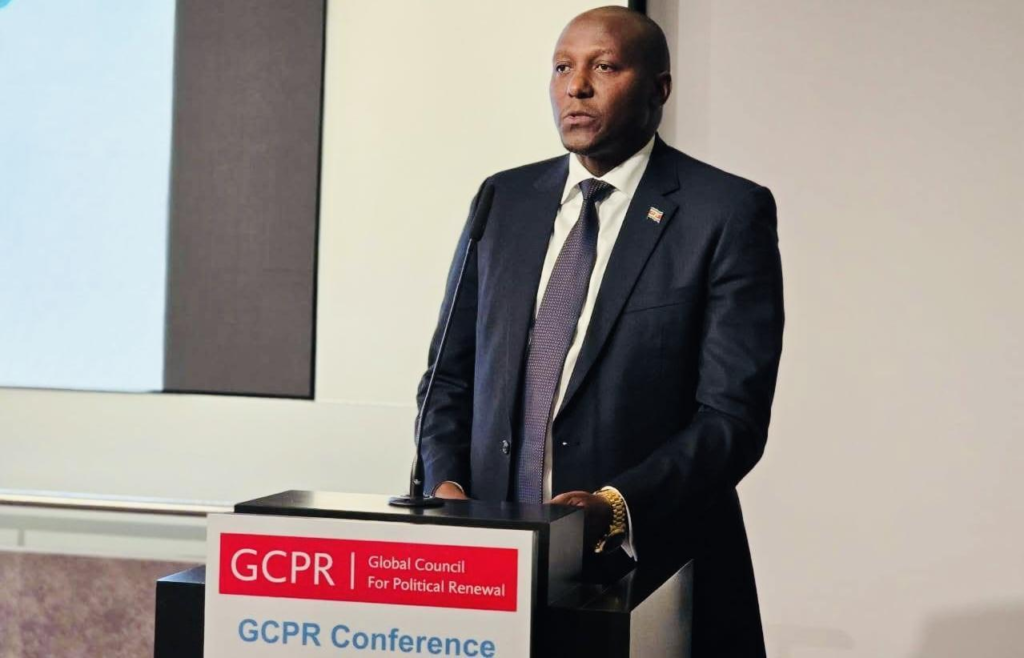
Eswatini’s Parliament has intensified scrutiny of Prime Minister Russell Mmiso Dlamini after the Parliamentary Finance Committee called on the Auditor General to investigate his alleged involvement in the irregular spending of funds linked to the controversial United States deportees agreement.
The recommendation, contained in a report tabled by Lobamba Lomdzala Member of Parliament Marwick Khumalo, Chairperson of the Finance Committee, marks one of the strongest parliamentary actions taken against the Prime Minister since he assumed office.
According to the committee’s findings, the Auditor General, Timothy Matsebula, should investigate allegations that part of the approximately R100 million paid by the United States Government was spent outside approved financial procedures. The report further suggests that the amount allegedly spent exceeded the R7 million that had already attracted public attention, raising fresh questions about the management of the funds.
The money originated from an agreement between Eswatini and the United States under which the kingdom accepted deportees from the US, including individuals reportedly convicted of serious crimes in their countries of origin. The agreement sparked widespread controversy across the region, with neighbouring South Africa expressing concern about its possible implications for regional security.
The handling of the funds has been equally controversial.
Previous reports alleged that the money was transferred to the National Disaster Management Agency (NDMA) instead of being administered through the Ministry of Finance and incorporated into the national fiscus. Critics argued that such a move bypassed established public finance procedures and reduced parliamentary oversight over public funds.
Now, Parliament itself appears to be demanding answers.
The Finance Committee’s recommendation reflects growing concern among legislators that public money may have been managed outside the legal framework established to ensure accountability and transparency.
The Auditor General plays a critical constitutional role in safeguarding public finances by independently examining how government institutions spend taxpayers’ money. A formal investigation could establish whether financial laws were followed and whether any public officials should be held accountable.
For many observers, however, the controversy extends beyond accounting procedures.
It raises fundamental questions about governance under Eswatini’s absolute monarchy.
Major agreements involving national security, foreign governments, and substantial financial commitments continue to be negotiated with limited public consultation. Parliament is often presented with decisions after they have already been made, reducing its ability to exercise meaningful oversight before public resources are committed.
The alleged irregular handling of the R100 million has therefore become a symbol of broader concerns about executive power and financial accountability.
Transparency is not merely an administrative requirement.
It is a cornerstone of democratic governance.
Citizens have a right to know how public funds are received, where they are deposited, who authorises expenditure, and whether every cent is spent for its intended purpose.
When such information is unavailable or appears inconsistent, public confidence in government institutions inevitably declines.
The controversy is particularly sensitive because Prime Minister Russell Mmiso Dlamini previously served as Chief Executive Officer of the National Disaster Management Agency before becoming Prime Minister. His previous tenure at the agency has already attracted public debate following Auditor General reports that questioned financial management during that period.
These past concerns have inevitably heightened public interest in allegations surrounding the latest transfer of funds.
The Finance Committee’s intervention also demonstrates that some Members of Parliament are increasingly willing to demand accountability from senior government officials, despite operating within a political system where executive authority remains heavily concentrated around the monarchy.
Whether the Auditor General proceeds with a comprehensive investigation remains to be seen.
If such an inquiry takes place, it will provide an important opportunity to establish the facts and determine whether public finance laws were complied with.
Ultimately, this matter is about more than one payment or one government department.
It is about whether those entrusted with managing public resources are prepared to submit themselves to the same standards of accountability expected in any system that claims to serve its people.
For a country facing widespread poverty, unemployment, and underfunded public services, every million rand matters. Public money must be managed openly, lawfully, and in the interests of the nation rather than the interests of those who hold political power.