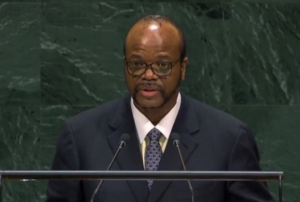
King Mswati Gifts Cape Town Students R55,000 as Questions Grow Over Neglect of University Students Back Home
King Mswati III has donated R55,000 in pocket money to eleven emaSwati studying at universities in Cape Town, with each student receiving R5,000 during a meeting held after the Southern African Customs Union (SACU) Summit.
The gesture has been welcomed by many as a form of support for students pursuing higher education abroad. However, it has also reignited debate about the government’s priorities, with student leaders questioning why similar assistance is rarely extended to thousands of university students studying inside Eswatini.
The issue was raised by Swaziland National Union of Students (SNUS) President Vusi Simelane, who said students enrolled at local institutions continue to face severe financial hardship while watching those studying abroad receive direct financial support from the King.
“We appreciate any assistance benefiting university students whether inside or outside the country but, we have noted that the King normally splashes cash to those studying outside the country. University students in Eswatini are struggling financially and the situation is deteriorating,” said the SNUS President.
His remarks reflect a concern that has become increasingly common among students and education advocates.
While R5,000 may provide temporary relief for a handful of students overseas, many more studying within Eswatini continue to struggle with unpaid allowances, accommodation costs, transport expenses, and the rising cost of living.
For years, students at the University of Eswatini and other tertiary institutions have repeatedly protested over delayed allowances, inadequate financial support, and conditions that many say make it difficult to complete their studies.
Some have been forced to skip meals, borrow money from friends and relatives, or abandon their studies altogether because they cannot meet basic living expenses.
Against that backdrop, the King’s donation has prompted difficult questions about fairness and national priorities.
If public leaders acknowledge the financial challenges facing students abroad, why should the same concern not extend to those studying at home?
Critics argue that meaningful support for education should not depend on where a student happens to be studying or whether they have the opportunity to meet the Monarch during an overseas visit.
Rather, assistance should be guided by clear and transparent national policies that ensure equal treatment for all deserving students.
The debate also highlights a broader issue within Eswatini’s governance system.
Acts of generosity by the King often receive significant public attention, yet they do not address the structural problems affecting education.
Thousands of young people continue to face unemployment after graduation, while universities themselves struggle with funding constraints and students continue to complain about insufficient financial assistance.
Many observers argue that sustainable investment in education requires more than occasional donations.
It requires a well-funded higher education system, predictable student allowances, improved learning facilities, and policies that ensure no student is denied an education because of poverty.
Eswatini remains one of the countries in Southern Africa facing high levels of youth unemployment. Education is widely regarded as one of the most important tools for breaking the cycle of poverty and creating economic opportunity.
For that reason, many believe government resources should prioritise strengthening the entire education sector rather than relying on symbolic acts of generosity that benefit only a small number of individuals.
The King’s donation to the Cape Town students will undoubtedly be appreciated by its recipients.
However, it also shines a spotlight on the thousands of students back home who continue to struggle every day without adequate financial support.
In a country where many families already face severe economic hardship, students should not have to depend on occasional gifts from political leaders to pursue their education.
Education is not a privilege reserved for the fortunate few.
It is a national investment.
If Eswatini is serious about empowering its young people and building a prosperous future, then every student, whether studying in Mbabane, Kwaluseni, Cape Town, or elsewhere, deserves equal opportunity, equal support, and equal dignity.
As student leaders continue calling for improved financial assistance, the challenge facing government is no longer whether it can make generous gestures.
The real challenge is whether it can build an education system where every young emaSwati has a fair chance to succeed, regardless of where they study.