HARARE’S EMPTY STREETS SPOKE LOUDER THAN PROTESTERS: WHEN A GOVERNMENT FEARS EVEN SILENCE, DEMOCRACY IS ALREADY IN TROUBLE
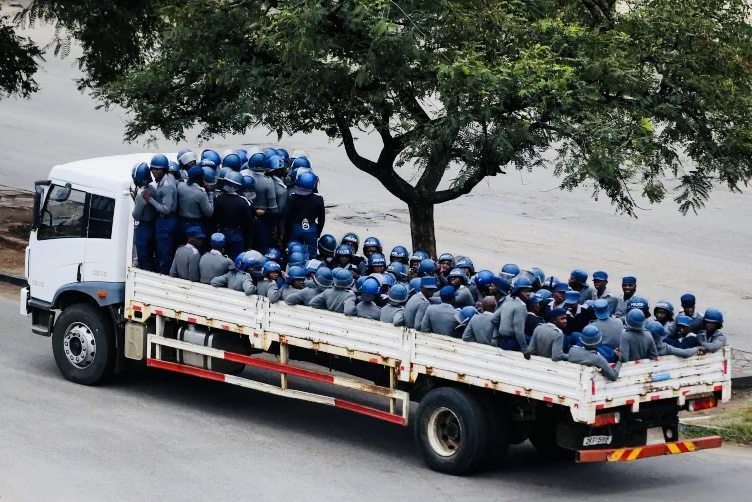
Harare did not need burning tyres, running battles or thousands of protesters carrying placards for Zimbabweans to send a political message. The unusually quiet streets following calls for a nationwide shutdown against controversial constitutional changes told their own story. Cars travelling towards the capital were fewer than on an ordinary working day, the usual rush into the central business district was noticeably absent and journeys that normally take longer because of traffic became unusually quick. But perhaps the most powerful image was not what Zimbabweans did. It was what their Government did before they could even do anything. Police officers were deployed across Harare, access to a popular gathering place was reportedly blocked and water cannon trucks were positioned near an area previously used for demonstrations. This happened against the background of President Emmerson Mnangagwa warning those considering protests. When citizens are being warned and security forces deployed before people have even assembled, then we must ask what exactly the State is frightened of.
The shutdown was called amid anger over proposed constitutional changes that critics say could potentially keep Mnangagwa in power until 2030. That issue goes far beyond one politician. Constitutions are supposed to protect citizens from the ambitions of those temporarily entrusted with power. They should never become documents that political leaders reshape whenever existing limits become inconvenient. Once constitutional rules can be changed to accommodate the political future of an incumbent, democracy becomes dangerously dependent on the wishes of those already controlling State institutions.
As an African watching from Eswatini, this is painfully familiar. We understand what happens when governments begin treating peaceful political participation as a security threat. In Eswatini, citizens demanding democratic reforms have faced arrests, violence, exile and intimidation. Elected MPs Bacede Mabuza and Mthandeni Dube ended up behind bars after becoming prominent voices for political change. Across our continent, rulers repeatedly tell us that repression is necessary for “peace”, “stability” and “national security”. But peace enforced by fear is not genuine peace.
Zimbabweans therefore did not have to fill the streets for Friday to carry political meaning.
An empty street can be a protest.
A closed business can be a protest.
A worker staying home can be a protest.
And sometimes silence itself becomes the loudest political statement available to citizens who know the possible consequences of assembling publicly.
The heavy security presence also exposes one of Africa’s greatest political contradictions. Governments repeatedly insist that they enjoy overwhelming public support, yet whenever citizens announce demonstrations, streets suddenly fill with police officers, barricades and water cannons. If leaders are genuinely secure in the support of their people, why should peaceful protesters frighten them?
Mnangagwa and his Government must understand that constitutional legitimacy cannot be manufactured through intimidation. Zimbabwe belongs to Zimbabweans, not ZANU PF, not the opposition and certainly not one individual occupying State House.
The same principle applies across Africa.
Uganda does not belong to Museveni. Eswatini does not belong to Mswati. Zimbabwe does not belong to Mnangagwa.
Countries belong to their people.
African leaders must stop behaving as though political office is personal property to be protected against citizens. Constitutions must protect generations, not presidencies.
Harare may have been quiet, but that silence should not be mistaken for surrender.
Sometimes people whisper because governments have made shouting dangerous.
And when an African government deploys water cannons against citizens who have not even gathered, perhaps the greatest political statement is not what happened in the streets.
It is how terrified those in power appeared that something might.