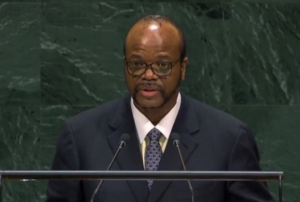
FORMER KING’S INTERPRETER EXPOSES GREED AND POWER STRUGGLES AT THE HEART OF TINKHUNDLA
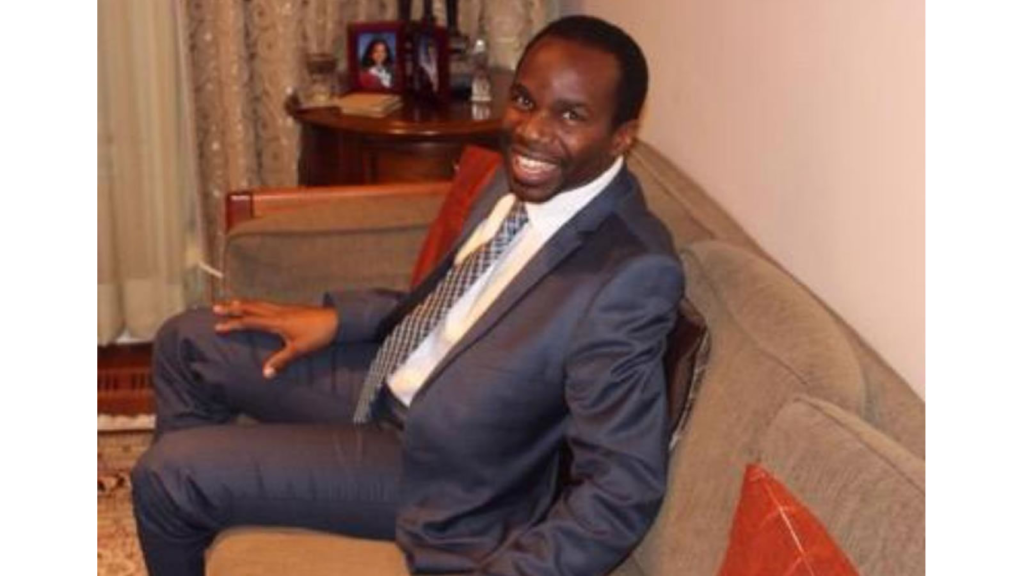
A remarkable warning from former King’s Interpreter Sihle Dlamini has once again exposed what many emaSwati have been saying for years: the greatest threat to Eswatini is not ordinary citizens demanding democracy, but the powerful individuals surrounding King Mswati who have turned the country into a playground for personal enrichment.
Dlamini, once part of the inner circles of power and associated with the politically connected JC religious network, has publicly cautioned King Mswati about individuals he says are addicted to power and wealth. In a statement released through his online platform, Dlamini warned that some people close to the King are placing personal interests ahead of the welfare of the nation.
“This is a fatal threat to our society and the institution of the Monarchy. When loyalty is transactional, it is never safe,” wrote the former royal interpreter.
His comments are significant because they come from someone who has seen the system from the inside. Unlike ordinary citizens who observe events from a distance, Dlamini understands how power operates within the royal establishment. His warning therefore cannot be dismissed lightly.
Ironically, what Dlamini is describing is not new. For decades, pro-democracy activists, journalists, civil society organisations and ordinary citizens have argued that Eswatini’s political system has created an environment where loyalty to powerful individuals is rewarded more than competence, accountability or service to the people.
The Tinkhundla system has often presented itself as a uniquely African form of governance that promotes unity and stability. Yet the reality experienced by many citizens is very different. Poverty remains widespread, unemployment continues to affect thousands of young people, public hospitals regularly struggle with shortages of medicine, and government institutions face constant allegations of corruption.
Despite these challenges, a small political and economic elite continues to prosper.
This is why Dlamini’s statement is so important. It indirectly confirms what critics of the monarchy have been highlighting for years. The biggest danger to Eswatini is not the activist demanding democratic reforms. It is not the journalist exposing corruption. It is not the citizen questioning government policies.
The real danger comes from individuals who exploit proximity to power for personal gain while pretending to be loyal servants of the nation.
Dlamini stopped short of naming the individuals he believes are corrupt and dangerous. He argued that doing so could create divisions within the Tinkhundla system. However, this raises an important question. If these individuals pose such a serious threat to the country and even to the monarchy itself, why should their identities remain hidden from the public?
Transparency is impossible when wrongdoing remains protected by secrecy.
For years, Eswatini has witnessed scandal after scandal involving public funds, questionable tenders, missing resources and allegations of abuse of power. Yet accountability remains rare. Investigations seldom produce meaningful consequences, while those linked to centres of power often emerge untouched.
This culture of impunity is precisely what allows dangerous individuals to thrive.
Perhaps the most revealing aspect of Dlamini’s statement is his acknowledgment that loyalty has become transactional. In simple terms, loyalty is no longer based on principles, values or patriotism. It is based on access to money, influence and privilege.
When a political system reaches that stage, corruption becomes inevitable.
As a human rights activist, one cannot ignore the deeper lesson contained in Dlamini’s warning. The problem is not merely a few greedy individuals. The problem is a political structure that concentrates enormous power in the hands of a small group while denying citizens meaningful democratic participation.
When power lacks accountability, opportunists naturally gather around it.
Today, former insiders are beginning to publicly admit what pro-democracy activists have said all along. The greatest threat to Eswatini’s future is not democracy. It is the unchecked greed, corruption and abuse of power that flourish under an absolute monarchy.
If King Mswati truly wishes to protect the institution he leads, he should not merely be concerned about the people surrounding him. He should confront the system that allows such people to prosper in the first place.
Until then, warnings like those from Sihle Dlamini will continue to emerge, while the ordinary people of Eswatini continue paying the price.