Wicknell Chivayo’s Eswatini Diplomatic Status Raises Questions Over Accountability, Political Connections and Due Diligence
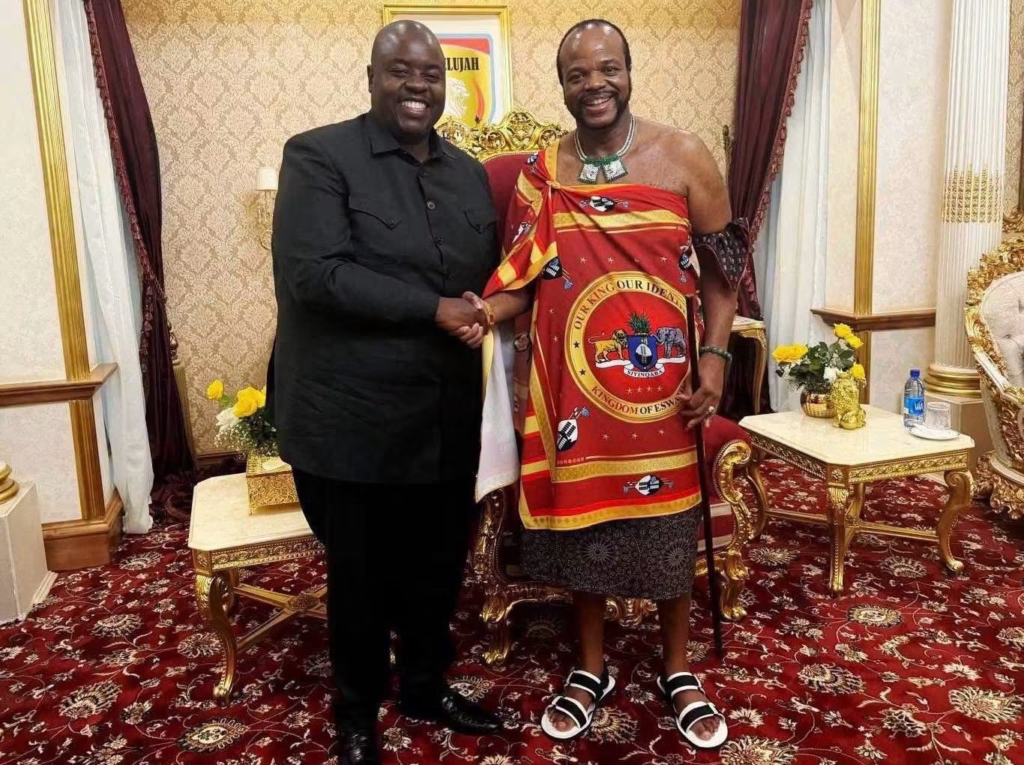
Zimbabwean businessman Wicknell Chivayo’s diplomatic status in Eswatini remains valid despite previous criminal allegations, according to King Mswati III’s Spokesperson Percy Simelane.
Simelane said the businessman’s diplomatic passport, reportedly granted personally by King Mswati, remains recognised because there is no court document currently disqualifying Chivayo from holding such status.
The statement has sparked renewed debate over how diplomatic privileges are granted in Eswatini, particularly when politically connected individuals with controversial histories receive recognition from the highest office in the country.
Responding to questions regarding whether background checks were conducted before the issuance of the diplomatic passport, Simelane said he did not have official details because passports are issued at ministerial level. However, he said the government would have determined that Chivayo met the requirements for the diplomatic category.
“We want to believe that if indeed he was issued the diplomatic passport, he met the requirements of its category. As soon as he duly meets the requirements of being charged for the alleged crimes, the law enforcement agents will take over. Until then, his current status stands,” said Simelane.
The controversy surrounding Chivayo comes amid his long-standing links to powerful political figures in Zimbabwe, particularly President Emmerson Mnangagwa and the ruling Zimbabwe African National Union-Patriotic Front (ZANU-PF).
Chivayo is the founder and Managing Director of Intratrek Zimbabwe, a company that has benefited from major government-related contracts. One of the most controversial deals involved a 2015 contract to construct a 100-megawatt solar power plant in Gwanda.
The project attracted public scrutiny after Intratrek received an advance payment of US$5 million from the Zimbabwe Power Company despite allegations that significant work had not been completed.
Chivayo also has a criminal history, having previously been convicted of theft and illegal foreign currency dealings. He was sentenced to three years imprisonment in 2004 and served time at Chikurubi Maximum Security Prison.
Over the years, he has faced further legal challenges, including allegations relating to the Gwanda solar project. However, he was later acquitted in 2024.
The businessman also became embroiled in controversy following leaked audio recordings that allegedly linked him to a US$100 million contract involving the supply of election materials to the Zimbabwe Electoral Commission.
The matter attracted the attention of Zimbabwe’s anti-corruption authorities, although investigations later stated that no evidence directly linked Chivayo to wrongdoing in that transaction.
While Chivayo has not been legally convicted in relation to these later allegations, his appointment to a diplomatic role in Eswatini has raised questions among governance and human rights observers.
The concern is not only about one individual.
It is about the standards applied when individuals are granted diplomatic privileges and whether political connections can influence access to state recognition.
Diplomatic passports are generally considered symbols of trust and representation. They provide holders with certain privileges and are normally associated with individuals who represent national interests abroad.
Critics argue that when such privileges are granted to businessmen with controversial backgrounds, governments must provide greater transparency to maintain public confidence.
The issue has become more sensitive because of the close political relationship between King Mswati and Zimbabwean President Emmerson Mnangagwa.
Both leaders have faced criticism from democracy and human rights activists over governance systems that concentrate political power among ruling elites.
The relationship between Eswatini and Zimbabwe has grown stronger through diplomatic and economic engagements, but critics argue that these connections also require greater accountability to ensure that political alliances do not override public interest.
In Eswatini, where the King exercises extensive executive powers under the Tinkhundla system, decisions involving royal appointments, diplomatic recognition, and state privileges often attract public scrutiny because citizens have limited mechanisms to challenge such decisions.
The Chivayo matter therefore raises wider questions about transparency within state institutions.
A government has the right to establish relationships with investors, businesspeople, and international partners. However, citizens also have the right to understand why certain individuals receive special recognition and what criteria are used in making those decisions.
The absence of a court conviction may legally protect Chivayo’s diplomatic status, as argued by the King’s Spokesperson.
However, public accountability goes beyond legal minimums.
Governments must also consider public confidence, ethical standards, and the perception created when controversial figures receive privileges from state institutions.
As Eswatini continues to strengthen ties with regional allies, including Zimbabwe, the Chivayo case highlights the importance of ensuring that diplomatic decisions are guided by transparency and national interest rather than political connections.
For many emaSwati, the question is not simply whether Wicknell Chivayo qualifies for a diplomatic passport.
The deeper question is whether powerful individuals across the region receive opportunities and protection unavailable to ordinary citizens because of their proximity to political leadership.
That question will continue to shape debates about governance, accountability, and the relationship between political power and economic influence in Southern Africa.