Social Media, Political Surveillance and the Continuing Struggle for Freedom of Association in Eswatini
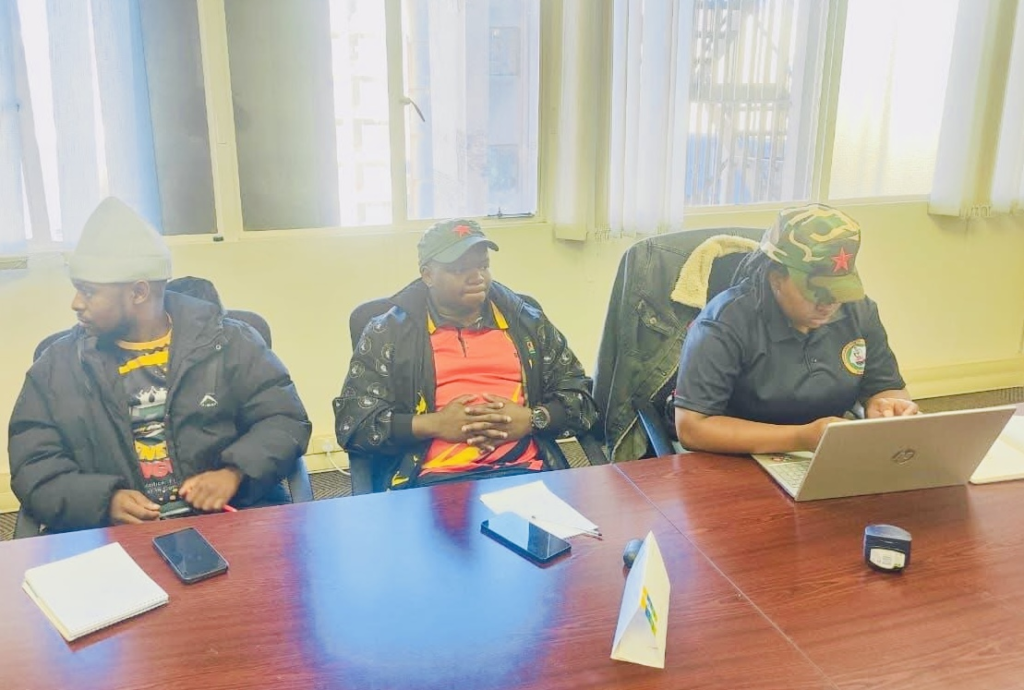
The continued restrictions on political activity in Eswatini have once again been highlighted after security agencies reportedly searched for members of the Swaziland Youth Congress (SWAYOCO) following a social media post linked to the organisation.
According to information gathered by this publication, police officers attempted to locate a meeting they believed was taking place inside the country after images circulated online suggesting that SWAYOCO leaders were gathered in Nhlangano. However, reports later indicated that the meeting was actually connected to activists operating outside Eswatini.
The incident reflects the difficult environment faced by pro-democracy movements in the Kingdom, where political parties remain prohibited from contesting elections and activists continue to organise under intense pressure from State security structures.
For many human rights defenders, the issue is not only about one meeting or one organisation, but about the broader question of whether citizens have the freedom to organise, debate political ideas and advocate for alternative systems of governance without fear of persecution.
Eswatini remains Africa’s last absolute monarchy, with executive power concentrated around King Mswati III. Critics of the Tinkhundla system argue that the absence of political parties in elections denies citizens the ability to freely choose between competing political visions.
The June 2021 unrest exposed the depth of public frustration, when thousands of citizens participated in demonstrations demanding democratic reforms. The Government responded with a security crackdown, leading to allegations of excessive use of force, arrests and restrictions on civil liberties.
Since then, many activists have either operated from exile or have had to find creative ways of communicating and organising. Social media has become one of the few remaining spaces where political discussions can continue, although activists often accuse authorities of monitoring online activity.
The use of security resources to monitor political movements raises questions about priorities in a country facing serious social and economic challenges. While many emaSwati struggle with unemployment, poverty and limited opportunities, critics argue that significant State attention continues to be directed towards controlling political dissent rather than addressing the root causes of public dissatisfaction.
A government confident in its legitimacy should not fear political competition, criticism or peaceful organisation. Democracy is strengthened when citizens are allowed to challenge leaders, propose alternatives and participate freely in shaping the future of their country.
The experience of Eswatini demonstrates the consequences of a political system where opposition voices are restricted. When citizens cannot express dissatisfaction through formal democratic channels, frustration often moves into informal spaces where mistrust between the people and the State continues to grow.
The question facing the Kingdom is whether political stability can be achieved through continued restrictions or whether lasting peace requires genuine reforms that give emaSwati a meaningful voice in determining their future.