PUDEMO YOUTH LEADER URGES EMASWATI TO SHOW COMPASSION TO TORTURE SURVIVOR
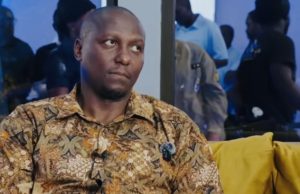
Sakhile “Awviva” Nxumalo, the President of the People’s United Democratic Movement Youth League, the Swaziland Youth Congress (SWAYOCO), has urged emaSwati not to direct anger or hostility toward former Economic Freedom Fighters (EFF) Swaziland President Ncamiso Ngcamphalala, who recently joined the Tinkhundla system after enduring extreme and traumatic torture at the hands of the state.
Nxumalo’s appeal follows renewed public debate and backlash against Ngcamphalala, who was once a vocal critic of the monarchy and a leading youth activist before his sudden political shift. According to a state intelligence police report whose contents were previously published by this Swaziland News, Ngcamphalala was brutally tortured by police officers in 2020.
The report reveals harrowing details. Ngcamphalala was allegedly assaulted until he lost control of his bodily functions. He was then forced by police to consume his own faeces as part of what is described as deliberate psychological and physical torture. Human rights defenders have described the incident as one of the most extreme forms of state brutality ever documented in Eswatini.
Efforts to reach Ngcamphalala for comment were unsuccessful at the time of compiling this report.
Speaking to this Swaziland News on Tuesday, Nxumalo said it was unfair and cruel for the public to judge or attack someone who has been subjected to such inhumane treatment. He said only those who do not understand the long-term psychological effects of torture would be angry at Ngcamphalala.
“Tinkhundla has survived on torture,” said Nxumalo. “This boy is no longer the same person after being forced to consume his own faeces. What happened to him must be condemned. Ngoba nyalo lomfana lendlela lasangiyo, nawukwati kulalela kahle, you can tell kutsi he is not normal. Tinkhundla destroyed this boy by torturing him. Government must be forced to pay all counselling costs because torture is a very traumatic experience.”
Nxumalo stressed that torture is designed not only to punish but to break the human spirit. He said the state deliberately uses extreme violence to destroy activists psychologically, knowing that once a person’s mind is broken, their political resistance collapses. According to him, Ngcamphalala’s current political choices cannot be understood outside the context of what was done to him in police custody.
Ngcamphalala, who was then President of Economic Freedom Fighters Swaziland, was reportedly targeted because of his outspoken criticism of the monarchy. He had publicly referred to King Mswati III as “macwatsa” and openly called on emaSwati to remove him from power. Those statements, PUDEMO believes, marked him for violent retaliation by the state.
People’s United Democratic Movement has consistently condemned the torture of Ngcamphalala, describing it as a crime against humanity. The movement says the case exposes how the Tinkhundla system relies on fear, violence, and humiliation to silence dissent.
Human rights activists argue that forcing a detainee to consume their own waste is not only torture but a deliberate act of dehumanisation meant to leave permanent psychological scars. They say such acts violate international law, including the Convention Against Torture, to which Eswatini is bound in principle but routinely ignores in practice.
Nxumalo warned that attacking torture survivors only helps the regime. He urged emaSwati to direct their anger where it belongs: at the system that authorises torture, protects perpetrators, and offers no accountability.
“This is not a story about betrayal,” he said. “It is a story about what torture does to the human mind. If we fail to understand that, we are helping the system that brutalised him.”
For many activists, Ngcamphalala’s case is a painful reminder that under an absolute monarchy, dissent is met not with debate, but with violence. Until torture is confronted, acknowledged, and punished, Eswatini will continue to produce broken activists and silenced voices—while the perpetrators remain free.