AMNESTY SAYS JUSTICE IS “INCOMPLETE” AS BACEDE MABUZA REMAINS JAILED
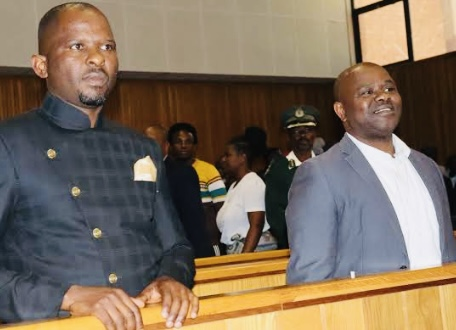
The conditional release of pro-democracy Member of Parliament Mthandeni Dube has been sharply criticised by Amnesty International, which says justice in Eswatini remains incomplete as long as MP Mduduzi Bacede Mabuza remains behind bars.
Vongai Chikwanda, the Deputy Regional Director for Eastern and Southern Africa at Amnesty International, made the remarks in a statement released this week following the royal pardon that led to Dube’s release from prison. While acknowledging that Dube’s release may bring relief to his family, Amnesty said the move falls far short of justice and exposes the regime’s continued repression of dissent.
“Mthandeni Dube’s release may bring relief to his family, but justice remains incomplete while his human rights are restricted by sweeping conditions and Bacede Mabuza, who was arrested together with Dube, is still in prison,” said Chikwanda. She stressed that both MPs should never have been imprisoned in the first place, as they were exercising their fundamental human rights peacefully.
Amnesty International demanded the immediate and unconditional release of MP Mduduzi Bacede Mabuza and called on the authorities to quash what it described as unfair convictions against both lawmakers. According to Amnesty, the continued imprisonment of Mabuza exposes the hollowness of the so-called pardon granted to Dube and confirms that repression remains state policy.
The two MPs were arrested together and later convicted on terrorism charges simply for demanding democratic reforms in a country ruled by King Mswati III as an absolute monarch. Their imprisonment shocked the region and drew widespread condemnation from human rights organisations, legal experts, and democratic movements across Africa and beyond.
Since their arrest, Amnesty International has consistently escalated the plight of the two MPs by engaging other international and regional human rights mechanisms. The organisation has repeatedly argued that charging elected lawmakers with terrorism for political speech is a gross abuse of the law and a clear attempt to silence opposition voices.
The pressure on the Eswatini regime has also come from the United Nations Human Rights Council. Its Working Group has urged the government to release MP Mduduzi Bacede Mabuza within six months from 15 October 2025, the date of its ruling. That deadline is fast approaching, yet the regime continues to defy international calls for compliance.
Mabuza is now the only remaining Member of Parliament still imprisoned for demanding democracy in Eswatini. His continued detention has become a powerful symbol of the monarchy’s intolerance for dissent and its willingness to criminalise peaceful political expression.
Reports indicate that the regime is attempting to pressure Mabuza into apologising as a condition for his release. Human rights groups have condemned this approach, arguing that demanding an apology for exercising basic rights amounts to forced humiliation and further punishment. Amnesty International and other organisations insist that no apology should be required because no crime was committed.
The conditional release of Dube, while leaving Mabuza in prison, exposes the selective and political nature of justice in Eswatini. It sends a message that freedom is granted at the pleasure of the King, not as a right guaranteed by law. This approach deepens the culture of fear and reinforces the reality that elected representatives can be jailed at will for challenging the monarchy.
As long as Bacede Mabuza remains behind bars, the international community’s verdict remains clear: justice in Eswatini is unfinished. The unconditional release of all political prisoners is not a favour to be negotiated, but a legal and moral obligation the regime continues to ignore.