ESWATINI’S “NON-ALIGNMENT” IS COWARDICE, NOT DIPLOMACY
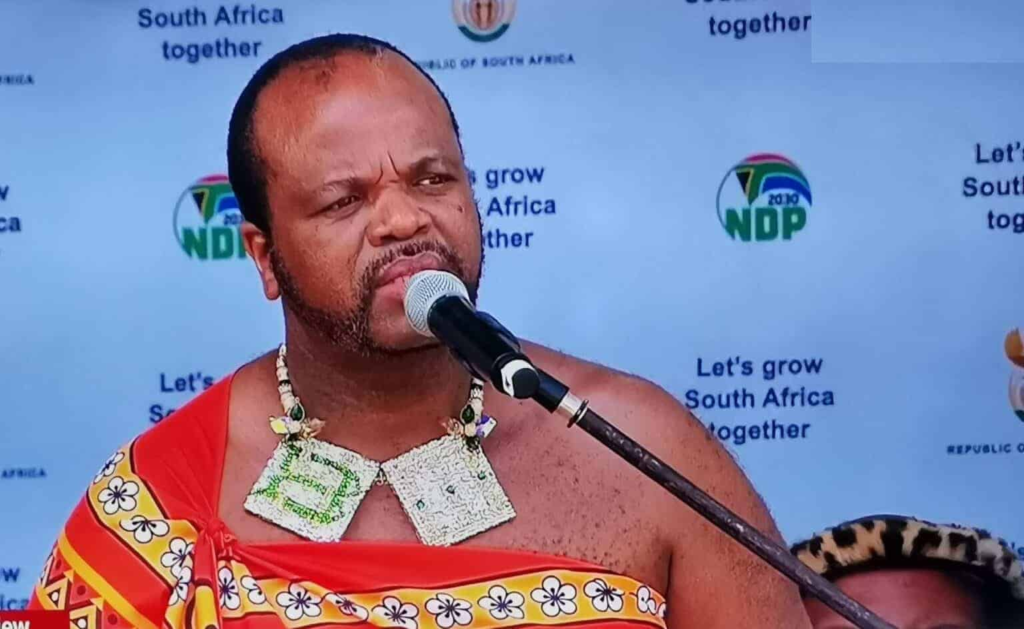
King Mswati III claims he will maintain Eswatini’s so-called non-alignment position amid escalating tension between the United States and Venezuela, but this posture exposes not wisdom or neutrality, but moral cowardice and political hypocrisy. His Spokesperson Percy Simelane told this Swaziland News that Eswatini will avoid involvement and instead “pray” as global peace is threatened.
This statement comes after United States forces invaded Venezuela and abducted President Nicolas Maduro, who has since appeared in a New York court facing charges of drug smuggling and terrorism. Regardless of one’s views on Maduro, the act itself has alarmed legal experts worldwide, who argue that the invasion and abduction violate international law and the United Nations Charter.
For King Mswati to respond to such a grave international crime with prayers and silence is shameful. Non-alignment does not mean abandoning principle. It does not mean refusing to speak when international law is violated. It does not mean hiding behind religion while powerful nations trample on the sovereignty of weaker states. What the King calls non-alignment is, in reality, fear of offending his powerful allies.
King Mswati III has never been non-aligned when it comes to protecting his own power. He openly aligns himself with authoritarian leaders, welcomes foreign military and economic deals that benefit the monarchy, and interferes in regional politics when it suits his interests. Yet when a clear violation of international law occurs, suddenly Eswatini must be silent and “play its cards close to the chest.”
This is the same King who lectures emaSwati about peace and stability while presiding over a system that bans political parties, jails activists, and kills dissenters. His call for prayer rings hollow in a country where justice is denied daily, where political prisoners rot in jail, and where accountability does not exist. A ruler who has failed to protect human rights at home has no moral authority to preach restraint on the global stage.
Human rights lawyer Sibusiso Nhlabatsi correctly described the United States operation as a gross violation of international law. Under the United Nations Charter, no country has the right to invade another and arrest a sitting Head of State without authorisation from the UN Security Council. That principle exists precisely to prevent powerful nations from acting as global police. By refusing to condemn this act, King Mswati is effectively endorsing lawlessness.
The King’s silence also reflects his own vulnerability. He knows that if international law can be ignored in Venezuela today, it can be ignored elsewhere tomorrow. Yet instead of standing with global justice, he chooses to keep quiet, hoping that obedience and neutrality will protect his throne. History shows that such silence never protects tyrants; it only exposes them.
Across Africa, people are increasingly rejecting leaders who hide behind neutrality while injustice spreads. True leadership requires moral clarity, not religious platitudes. It requires speaking out even when it is uncomfortable. King Mswati’s response shows once again that Eswatini is ruled not by a statesman, but by a monarch whose only consistent principle is self-preservation.
If Eswatini were a democracy, its government would debate this crisis openly and take a principled position grounded in international law and human rights. Instead, decisions are made by one man and communicated through a spokesperson who offers prayers instead of policy.
In a world where global peace is indeed fragile, silence is not neutrality. Silence is complicity. And King Mswati’s so-called non-alignment is nothing more than another reminder that absolute monarchies are incapable of moral leadership, at home or abroad.