MUSEVENI’S EARLY “LANDSLIDE” MIRRORS RIGGED ELECTIONS ACROSS THE REGION
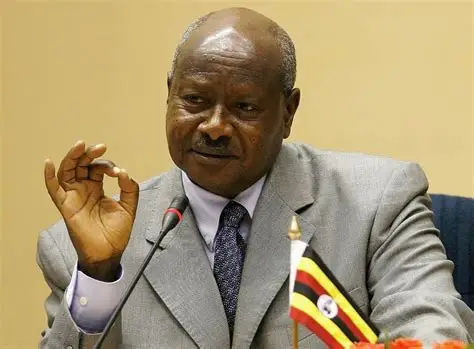
Early election results from Uganda have once again exposed a familiar script that many Africans know too well. According to preliminary figures released by the Electoral Commission and reported by Reuters, President Yoweri Museveni is leading with about 76% of the votes counted so far, while his main challenger, Bobi Wine, trails with roughly 20%.
For anyone who has followed politics in the region, these numbers are not shocking. They follow a well-worn pattern where long-serving strongmen conveniently secure overwhelming victories long before all votes are counted, opposition complaints are heard, or independent audits are conducted. In Uganda, as in many countries ruled by authoritarian leaders, elections have become rituals meant to legitimise power, not reflect the will of the people.
Yoweri Museveni has ruled Uganda for nearly four decades. During that time, elections have been held regularly, yet power has never changed hands. Each election cycle is marked by military deployments, internet shutdowns, arrests of opposition supporters, and restrictions on independent media. When results are announced, they are always decisive in Museveni’s favour, often by margins that defy political reality on the ground.
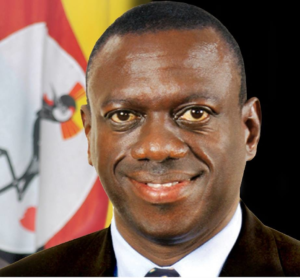
Bobi Wine represents a new generation of African opposition leaders who challenge entrenched systems. Like many before him, his participation in elections has been met with intimidation, violence, and systemic obstruction. Yet when the final tally is announced, the incumbent emerges with an overwhelming victory, and the opposition is told to accept the outcome in the name of “stability.”
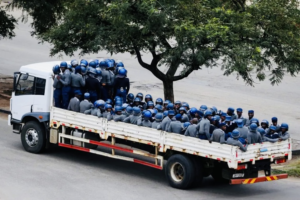
This situation is painfully familiar to people in southern Africa. In Zimbabwe, elections follow a similar pattern. The ruling elite controls the electoral commission, security forces are deployed in communities ahead of voting, opposition rallies are disrupted, and state media becomes a propaganda machine. When voting ends, results are delayed, manipulated, or selectively announced until the desired outcome is secured. The winner is always the incumbent or his chosen successor, usually with an implausibly large margin.
The parallels with Eswatini are impossible to ignore. While Eswatini does not hold party-based elections, the outcome is the same: absolute control by the monarch and his loyalists. Whether through managed elections like Uganda and Zimbabwe, or through a banned political system like Eswatini, the goal is identical—to prevent genuine democratic choice.
What makes this even more troubling is that these leaders protect and reinforce each other. King Mswati maintains close relations with presidents like Museveni and other regional strongmen. They attend each other’s ceremonies, praise each other’s “stability,” and quietly support systems that suppress dissent. In this club of authoritarian rulers, democracy is seen as a threat, not a value.
The language used after such elections is also identical. Regional bodies speak of “peaceful polls,” governments congratulate the winner, and calls for reforms are ignored. The lived reality of citizens—poverty, unemployment, repression, and fear—is brushed aside in favour of political convenience.
Early results showing Museveni at 76% are therefore not a sign of popularity; they are a signal that the system is working exactly as designed. Elections are reduced to numbers that justify continued rule, while opposition voices are criminalised and ordinary people are silenced.
Across Africa, especially in countries ruled by men who have overstayed their welcome, elections have lost meaning. They are no longer a tool for change but a shield for repression. Until systems are dismantled, institutions are freed, and citizens are allowed to choose without fear, these “landslide victories” will keep repeating themselves—from Kampala to Harare, and from Harare to Mbabane.
The lesson is clear: when power is concentrated, elections become theatre. And when the same leaders remain in power decade after decade, democracy is already dead, no matter what the numbers say.